
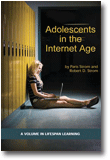
Adolescents in the Internet Age
By:
Paris S. Strom, Auburn University
Robert D. Strom, Arizona State University
A volume in the series: Lifespan Learning. Editor(s): Paris S. Strom, Auburn University. Robert D. Strom, Arizona State University.
Published 2009
The tools of communication technology have transformed socialization and education of adolescents. They are the first generation to be growing up with the Internet, cell phones, iPods, computers, electronic hand helds and satellite television. Building friendships and social networks are common experiences online. Most teenagers prefer the Internet as the main source of learning. Because students know things that are unknown to teachers, their traditional relationship can shift to provide greater benefit for both parties if they pursue reciprocal learning.
This book introduces a new set of core topics to reflect current conditions of the adolescent environment instead of life in yesterday’s world. The discussion shows how the Internet can be used to practice skills needed for learning and working in the future. Visual intelligence and media literacy are essential for critical thinking. Creative thinking should be encouraged in classrooms and become a more common outcome of schooling. Social maturity can improve when networking includes interaction with adults as well as peers. Prevention of cheating and cyber abuse presents unprecedented challenges. Understanding sexuality, nutrition, exercise, and stress contribute to a healthy lifestyle.
Teamwork skills, peer evaluation, and exercises for cooperative learning groups are presented. Classroom applications address the practical concerns of teachers. The book is organized in four domains of identity, cognitive, social, and health expectations. Each chapter includes student polls to assess conditions of learning and websites that augment the book content. The target audience is prospective teachers, in-service teachers, and school administrators studying adolescent development on campus and by distance learning.
CONTENTS
Preface. PART I: IDENTITY EXPECTATIONS 1. Perspectives on Adolescence. 2. Cultural Change and Education. 3. Goals, Identity, and Motivation. PART II: COGNITIVE EXPECTATIONS 4. Mental Abilities and Achievement. 5. The Internet and Media Literacy. 6. Creative Thinking and Problem Solving. PART III: SOCIAL EXPECTATIONS 7. Social Maturity and Teamwork. 8. Risks for Adolescents and Schools. 9. Values and Ethical Character. PART IV: HEALTH EXPECTATIONS 10. Physical Health and Lifestyle. 11. Self Control and Safe Schools. 12. Emotions and Resilience. References
-
Paperback978-1-60752-118-1
Web price: $62.04 (Reg. 72.99)
-
Hardcover978-1-60752-119-8
Web price: $89.24 (Reg. 104.99)
- eBook9781607522492


- EDU025000 - EDUCATION: Secondary
- EDU037000 - EDUCATION: Research
- PSY006000 - PSYCHOLOGY: PSYCHOTHERAPY: Child & Adolescent
-
 Adolescents in the Internet Age
A Team Learning and Teaching Perspective Third Edition
Adolescents in the Internet Age
A Team Learning and Teaching Perspective Third Edition
-
 Adolescents In The Internet Age, 2nd Edition
Teaching And Learning From Them
Adolescents In The Internet Age, 2nd Edition
Teaching And Learning From Them
-
 Adult Learning and Relationships
-
 Learning Throughout Life
An Intergenerational Perspective
Learning Throughout Life
An Intergenerational Perspective
-
 Polling Student Voices for School Improvement
A Guide for Educational Leaders - 2nd Edition
Polling Student Voices for School Improvement
A Guide for Educational Leaders - 2nd Edition
-
 Polling Students for School Improvement and Reform
-
 Thinking in Childhood and Adolescence